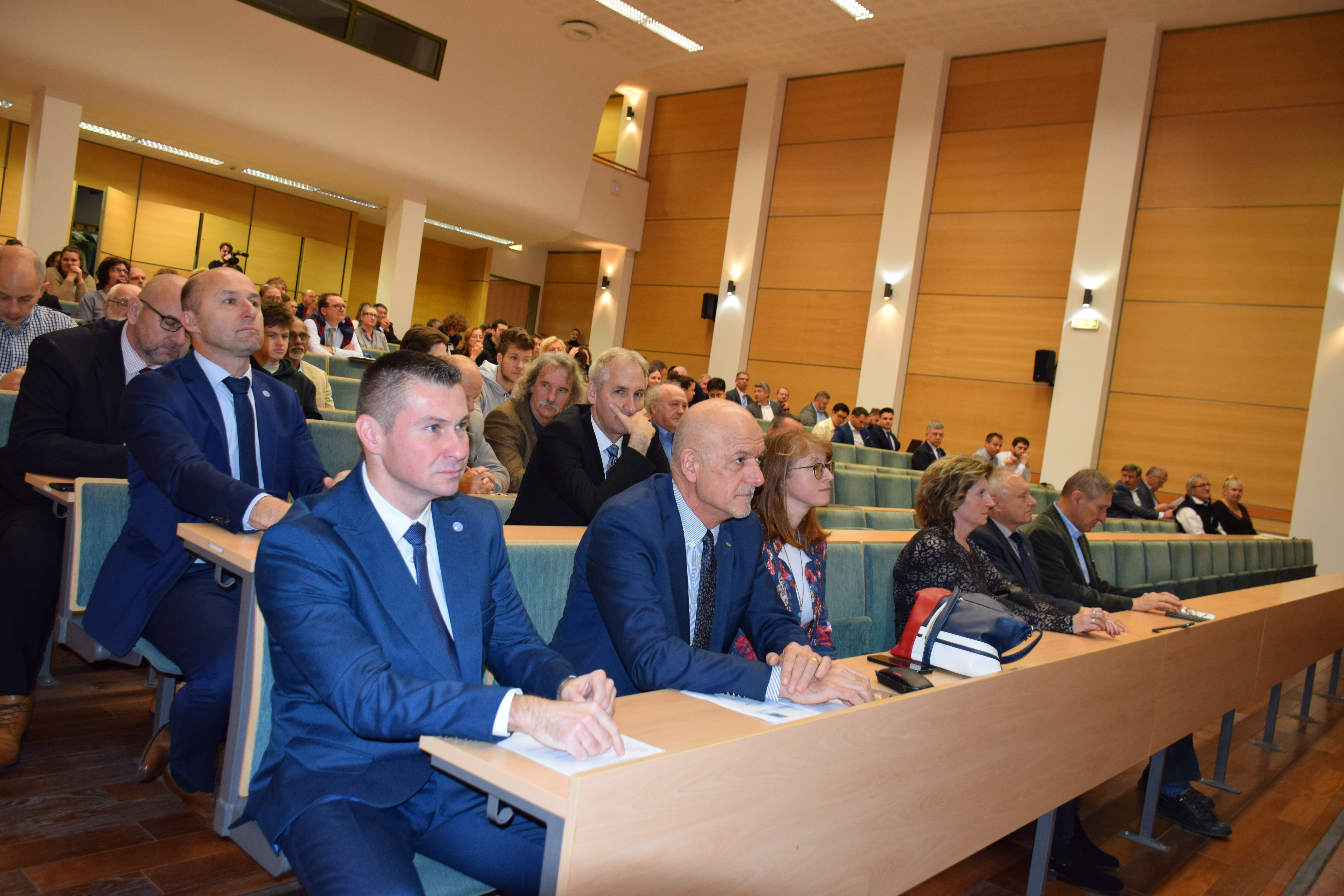

The 5th National Urban Stormwater Management Conference, organised by the Faculty of Water Sciences (VTK) of the National University of Public Service (NKE), was held in Baja on November 27 and concluded successfully with nearly two hundred participants. This year’s professional forum focused on “Adaptive water management.”
In addition to discussing nature-based and sustainable solutions for managing problems caused by sudden heavy rainfall, the event also addressed the development of regulatory and strategic frameworks and the applicability of international best practices.
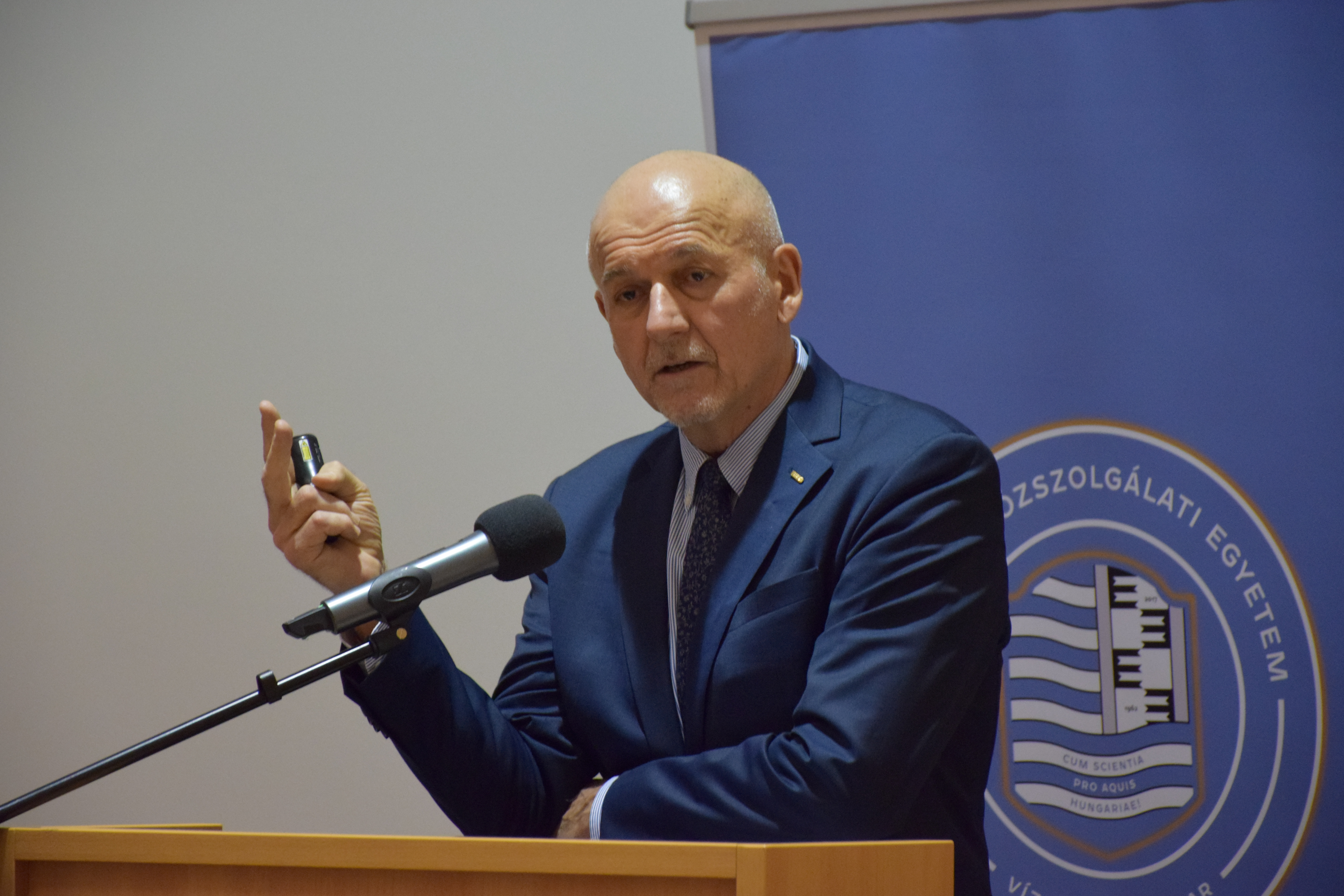
Dr Károly Kovács, founder of Pureco and president of the Hungarian Water Association (HWA), delivered the opening plenary lecture on effective rainwater management, changes in the legal and policy environment, and the impact of the built environment on rainwater. He also emphasised the importance of water as an energy storage resource in water management. In his presentation, he pointed out:
“Evaporating one liter of water results in approximately 0.7 kWh of energy retention; for one cubic meter of water, this figure reaches 700 kWh. If we can retain and evaporate one cubic meter of water locally, it is equivalent to operating a 700-kWh climate control system.”
In the technical solutions session, Zoltán Baráth Jr., project manager at Pureco Ltd., gave a presentation on rainwater treatment innovations and their operational benefits. He showcased some unconventional uses of certain products and their advantages, including open-ditch rainwater pre-treatment units, slot drains for rainwater conveyance, spiral-seamed steel tanks, and oil separators.
This year’s conference was unique because, unlike previous years, the final afternoon session was held in English with international participants, offering a global perspective on rainwater management in urbanised areas and creating an opportunity to share foreign and international experiences. In his speech during the international session, Dr Károly Kovács highlighted that during increasingly frequent extreme weather events caused by climate change, urban infrastructure faces significant loads of polluted rainwater. Due to undervalued utility infrastructure, low water resource costs, and the unpaid nature of rainwater drainage and treatment, rainwater currently has no perceived value. Both residents and industrial stakeholders fail to utilise this resource because of the low return on investment for rainwater-related projects. However, he noted promising developments such as tightening regulatory requirements (see UWWTD) and a new perspective in rainwater management—the climatic impact already mentioned above.
You can watch the television summary of the event here (in Hungarian).