
Within the framework of Planet Budapest, the Future of Water conference organised by the Hungarian Water Partnership (HWP) served not only as a symbol of our commitment, but also as a catalyst for long-term professional partnerships.
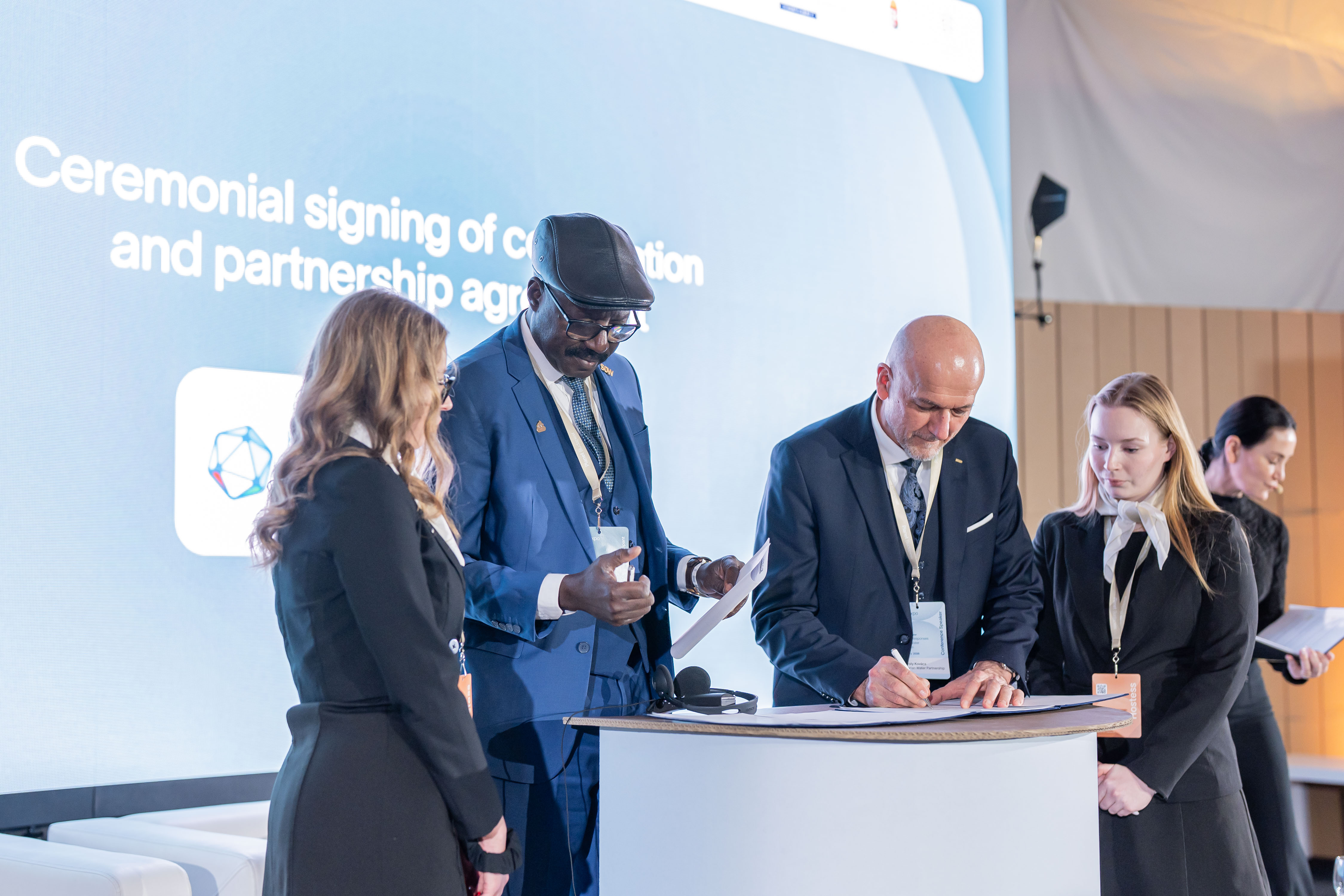
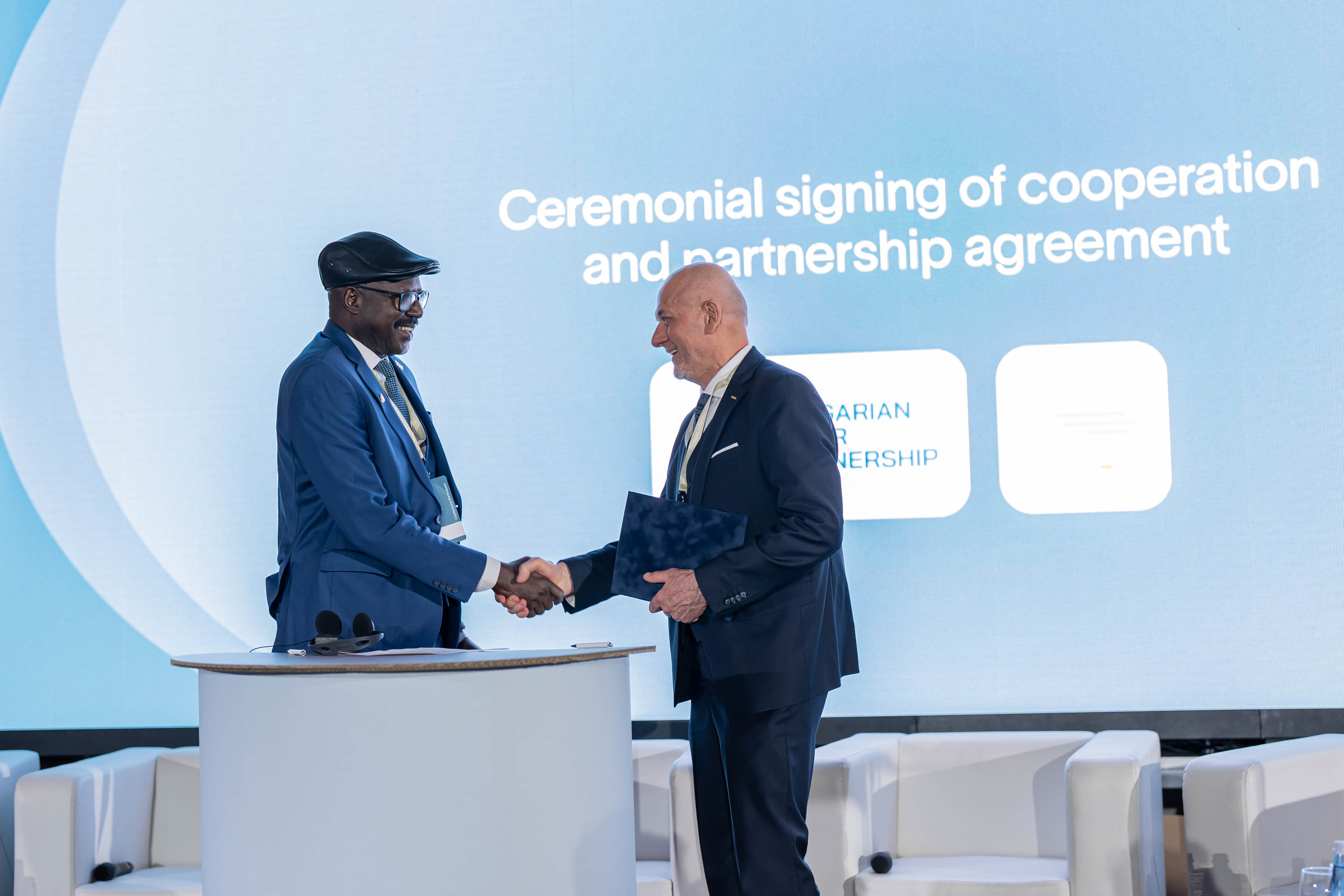
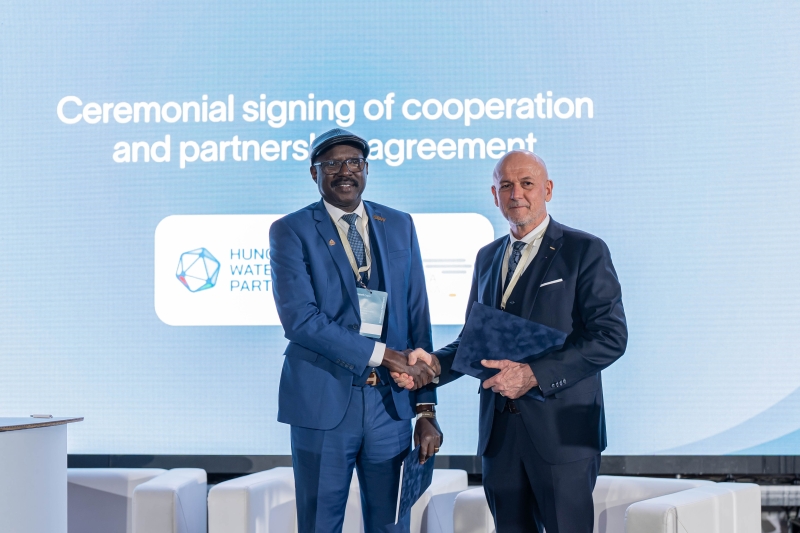
On 27 February 2026, HWP and the Pan-African Association of Sanitation Actors (PASA) signed a Memorandum of Understanding (MoU).
The agreement marks a milestone in the series of professional Hungarian–African wastewater cooperation efforts. It also represents recognition of Hungarian technologies developed for the treatment of wastewater collected and transported from non-sewered settlements and large urban areas, such as Septopure®, which has already been successfully applied and acknowledged internationally, including by the United Nations, for its contribution to drinking water and wastewater treatment.
Building on these achievements, HWP entered into a collaboration with PASA, a leading force in the development of faecal sludge treatment solutions.
The memorandum was signed by Dr Károly Kovács, President of HWP and founder of Pureco, and Ibra Sow, President of PASA, during the Future of Water conference in Budapest.
Global sanitation challenges
In many rapidly growing cities around the world, particularly in Africa and Southeast Asia, wastewater is not collected or treated through centralised sewer networks. Closed toilets (which do not always equate to flush toilets) are viewed as sources of faecal sludge that can be processed for resource recovery; however, the proper treatment of the resulting wastewater is given a lower priority than it should be from environmental and public health perspectives.
Due to rapid population growth and expanding infrastructure, such as roads and housing, building conventional sewered networks in these cities is not feasible because of massive investment requirements and limited bankability.
Across many African regions, the prevailing model remains: empty – transport – dispose.
The cooperation between PASA and the Hungarian Water Partnership aims to redefine this model by creating an integrated service chain that ensures the proper treatment of collected faecal sludge and supports environmentally responsible, non-sewered sanitation systems.
The partners aim to establish a circular, resource- and environment-oriented non-sewered sanitation ecosystem, building on existing professional collaborations in Africa - particularly the work of Mamadou Ndiour, Chair of the AfWASA Sanitation Specialist Group, and Dr Károly Kovács, Member of AfWASA’s Strategic and Technological Council and Vice Chair of the Sanitation Specialist Group.
The role of PASA in Africa
Founded in 2019, PASA brings together sanitation-focused organisations from 31 African countries. As a continental platform, its mission is to strengthen the professionalisation of the sanitation sector, promote collaboration, and support sustainable faecal sludge management and public health improvements.
Building an integrated sanitation value chain
The newly signed partnership aims to strengthen the entire non-sewered sanitation value chain—from collection and transport to treatment and resource recovery.
Key objectives of the cooperation include:
- developing integrated technical solutions for non-sewered systems,
- supporting appropriate regulatory frameworks,
- fostering knowledge transfer and stakeholder collaboration,
- further supporting the professional work of the AfWASA Sanitation Specialist Group,
- establishing a sustainable non-sewered sanitation service ecosystem.
Pureco’s expertise plays a central role in all this. The collaboration builds on the Pureco-developed, UN-recognised Septopure® technology, which has already been successfully implemented in three cities in Ghana to deliver 100% treatment of faecal sludge.
Strengthening the societal role of the sanitation sector
Beyond technological development, the partnership seeks to elevate the societal perception of the sanitation profession.
Sanitation services are often regarded merely as waste disposal tasks, although they play a vital role in protecting water resources, safeguarding public health, and preserving the environment.
Modern sanitation services in Africa - and globally - must shift toward environmentally responsible, treatment-focused models, where appropriate end-of-chain technologies transform liquid waste into resource-oriented, value-creating systems.
Moreover, the agreement aims to attract new generations of professionals to the water sector, ensuring that drinking water and wastewater treatment become mission-driven fields dedicated to protecting Earth’s most essential resource.
We are proud that the Future of Water international conference served not only as a meeting point but also as a true catalyst for shared thinking and joint action. We believe that this partnership is not merely an institutional agreement—it is a foundation for long-term, fruitful relationships that will have a tangible impact on the water security and sustainable future of Africa.